
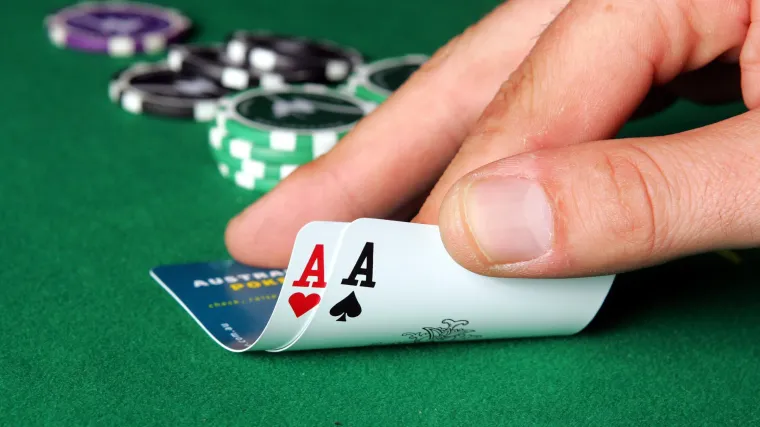
Poker isn’t just about bluffing or reading opponents—it’s a numbers game at its core. Understanding poker odds and probability helps you make smarter decisions, avoid costly mistakes, and gain a long-term edge at the table. This guide breaks everything down in plain language, with practical examples you can actually use while playing.
What Are Poker Odds?
Poker odds describe the likelihood of a certain event happening, such as hitting a flush or improving your hand on the next card. Odds are usually expressed as ratios, like 4:1, meaning the event will happen once for every four times it doesn’t.
In simple terms:
-
Odds compare success vs. failure
-
Probability compares success vs. all possible outcomes
Both are closely connected, but odds are often more practical during live play.
Understanding Probability in Poker
Probability is shown as a percentage. It tells you how often something will happen over the long run.
For example:
-
If you have a 20% chance to hit your card
-
That means it should happen 20 times out of 100
Poker doesn’t guarantee short-term results, but probability keeps you profitable in the long run.
Common Poker Hand Probabilities
Here’s a snapshot of how rare different poker hands are in Texas Hold’em:
-
Royal Flush – 0.00015%
-
Straight Flush – 0.0014%
-
Four of a Kind – 0.024%
-
Full House – 0.14%
-
Flush – 0.20%
-
Straight – 0.39%
-
Three of a Kind – 2.1%
-
Two Pair – 4.75%
-
One Pair – 42.3%
This explains why strong hands are valuable and why patience matters.
What Are “Outs” in Poker?
Outs are the cards left in the deck that can improve your hand.
Example:
-
You have four hearts
-
There are 13 hearts total
-
You’ve seen 4
-
That leaves 9 outs to complete a flush
Counting outs is the foundation of poker math.
The Rule of 2 and 4 (Quick Odds Trick)
To estimate your chance of improving without complex math:
-
After the flop (two cards to come):
Multiply your outs by 4 -
After the turn (one card to come):
Multiply your outs by 2
Example:
-
9 outs × 4 = 36% chance after the flop
-
9 outs × 2 = 18% chance after the turn
This method is fast, simple, and accurate enough for real games.
Pot Odds Explained Simply
Pot odds compare:
-
The size of the pot
-
The cost of your call
Example:
-
Pot = $100
-
Opponent bets $20
-
You must call $20 to win $120
Your pot odds are 6:1
If your chance of winning is better than those odds, the call is mathematically correct.
Using Odds to Make Better Decisions
Poker odds help answer one key question:
Is this call profitable in the long run?
You should:
-
Call when pot odds > chance of losing
-
Fold when risk outweighs reward
This approach removes emotion and replaces it with logic.
Why Poker Probability Beats Guesswork
Relying on luck might work once or twice, but probability wins over time. Skilled players don’t chase every hand—they wait for spots where the math is on their side.
Benefits of understanding odds:
-
Fewer bad calls
-
Better bluff timing
-
Stronger bankroll control
-
More consistent results
Common Beginner Mistakes with Odds
New players often:
-
Overvalue weak draws
-
Ignore pot odds
-
Chase unlikely hands
-
Forget long-term probability
Avoiding these mistakes instantly improves your game.
FAQs
1. Are poker odds the same in every poker variant?
No. Odds change depending on the number of cards, players, and rules. Texas Hold’em and Omaha have very different probabilities.
2. Do professional players calculate odds on every hand?
Not exactly. Most use experience and quick estimates rather than exact calculations during play.
3. Can poker odds guarantee winning?
No. Odds improve decision-making over time but don’t eliminate short-term variance.
4. Is learning poker math hard for beginners?
Not at all. Basic concepts like outs, pot odds, and the rule of 2 and 4 are easy to learn and very effective.
5. Should I always follow the odds?
Odds guide decisions, but table dynamics, opponent behavior, and position also matter.
6. How long does it take to get comfortable with poker probability?
Most players feel confident after a few weeks of practice and real-game application.
7. Are poker odds useful in online and live games?
Yes. The math stays the same—only the pace and reading opponents change.
